
Fashion, long celebrated as a mirror of culture and identity, is revolutionising and defining it with a tech-savvy and sustainable outlook. Over the years, it has been known as the fastest-changing Industry. It is now redefined by eco-conscious practices, digital innovation, and circular design
systems. It is emerging as the fulcrum of transformation by reshaping the production methods, consumption, and use of the raw materials, leading to a shift from traditional to the future of innovation, technological advancements, and sustainability.
But beneath these sparkles lies a serious challenge: the fashion industry is one of the largest polluters in the world, responsible for carbon emissions, excessive water use, and millions of tons of textiles that get wasted each year. This is pushing all the individuals to one goal of conscious consumption, while encouraging operational efficiency and lean manufacturing in the production of garments. This is where sustainable fashion fits in. Sustainable https://fashinnovation.nyc/technology-and-his-role-in-sustainability/ Fashion refers to the manufacture of clothes in a
manner that is more friendly to both the people and the planet. It is concerned with the exploitation of environmentally friendly materials, waste minimisation, recycling of used garments, and fair labour. Simply put, it is about making fashion better, not faster.
Trends were the driving force of fashion throughout the decades, and the emergence of fast fashion turned clothes into cheap and easily available, but also disposable. Technology is assisting in changing that story today. In the same way that the other industries have embraced innovation as a way to become cleaner and smarter, fashion is currently adopting AI, recycling technologies, digital fashion, and blockchain to enter a more sustainable future. This blog will take you through the evolution of fashion and its transformation by technology into a more sustainable one, and the future, in the following sections. The readers will be able to get a clear picture of how the industry has come so far in its history, to its current innovations and prospects in the future.

Fashion is the history of human evolution as well. In the Pre-industrial period, clothing was homemade, slow and valuable. Clothing was patched, recycled and even inherited through families. There was also little waste as clothes were designed to be worn. During the Industrial Revolution (18th–19th century), it all depended on mechanisation. Mass production was made possible by power looms, spinning machines and sewing machines. Fashion emerged as a separate industry when clothing became cheap and affordable to the upper middle classes. Later,
in the globalisation period (1980s–2000s), global trade became liberal, and the supply chains extended all over the globe. Fast fashion, such as Zara, H&M, and Forever 21, has led to the creation of cheap and fashion-driven clothing at such a high rate. People purchased more but spent less time wearing clothes, which resulted in huge waste. Today, in the present-day turnover, fashion is at a new turning point. The industry is being forced to reinvent itself through climate change, scarcity of resources and consumer awareness. The artificial intelligence-driven forecasting technology, 3D design, and blockchain-based transparency are among the technologies that are pushing fashion towards circularity and sustainability. Building on this historical journey, it is important to see how fashion contributes to the global economy and why sustainability and technology are now central to its growth.
Sustainable fashion and technology are no longer niche experiments; they are now being worked on a global level. It is growing with the help of technological transformations, innovations such as digital design, AI-powered trend forecasting, virtual fitting rooms, smart fabrics, and
blockchain for transparency are not just trends, they are essential pillars of modern competitiveness. They are cutting the costs of manufacturing the goods, reducing the waste and leading to a positive change.
Globally, the fashion industry is valued at around $1.7 trillion. It supports more than 300 million people worldwide across design, manufacturing, retail, and related services. At the same time the industry is responsible for nearly 10% of global carbon emissions and 20% of global
wastewater (1) London Fashion Week, through the British Fashion Council, will require all participating brands to have ESG strategies, preferred materials, and no single-use props by January 2026. Following the ESG strategies, reducing the carbon footprint has become the baseline of the investments worldwide and also leads to higher consumer trust since all the consumers are well aware of these practices and are keen for regulation in countries. While these trends highlight fashion’s global impact, India holds a unique place in this story as one of the largest textile producers and a rising hub for fashion technology and sustainability.
One of the largest clothing and textile manufacturers in the world is India. The industry has a contribution of approximately 2 per cent to the GDP and 12 per cent of the total exports in India. More to the point, it offers employment to more than 45 million individuals directly and to
approximately 100 million through indirect means, thereby ranking as the second-largest employer in the country, second only to agriculture. (2)
India is becoming a high-growth market in terms of the implementation of fashion tech. The consideration of investments in sustainable fashion practices is becoming more of a strategic benefit to the brand's resilience, brand loyalty, and an increased pool of consumers. The sector
that supports the Indian economy is the textile industry, which has 45 million employees and results in the biggest industrial production.
The industry is bullish, rapidly growing with an increase in the market share in the economy. Digital fashion and NFT-driven apparel are the accelerating frontiers of India’s fashion technology market, opening up new streams of value in virtual goods providing consumers with
an exceptional experience. At the same time, India holds a strong position in sustainable consumption trends with the dominance of fast fashion still commanding around 14% of the clothing market, and is rapidly growing. Beyond its economic weight, India’s fashion sector is part of a larger global ecosystem, and understanding the overall industry structure gives a clearer view of how different segments drive change.
The fashion industry is one of the most influential industries in the world, a special combinationof art, trade, and technology. It is not just about clothes but a whole ecosystem which involves clothes, clothing, shoes, luxury, accessories, and now even digital clothes. Every item to enter
this ecosystem begins with materials, and the selection of those materials has always dictated the narrative of fashion.
Natural materials: Clothes were produced using cotton, silk, wool, jute, and linen over countless centuries. Cotton specifically has influenced world business and culture from hand-woven khadi in India to denim jeans. Nevertheless, cotton is also a water-consuming crop: it
takes up to 2,700 liters of water to make a single cotton shirt.
Synthetic fibres: Polyester, nylon, and acrylic were introduced during the 20th century. These fibres revolutionised fashion because they made clothing cheaper, stretchier, and much easier to wear. Polyester is presently the most popular fibre in the world, with it constituting more than
50% of all textiles in the world. But there is a downside to it: each wash contaminates rivers and oceans with microplastics.
Eco-friendly options: As the climate-related issues become more significant, the sector tries out more eco-friendly materials. Organic cotton does not contain dangerous pesticides, hemp does not demand much water, and bamboo is biodegradable. Plastic bottles can be recycled into polyester to provide a second life to the waste. The most interesting ones are those in biomaterials: mushroom leather ( Mylo ), cactus leather, and pineapple fibre ( Pinatex ) are coming up as the representatives of the future of leather and synthetics.
Fashion is culture, not to mention it is an economic powerhouse that drives up growth, trade, and
livelihoods.
Global level: Fashion is one of the biggest consumer markets, with a value of 1.7 trillion. It has over 300 million employees; thus, it is an important source of revenue in developing countries where apparel exports rule. It also promotes neighbouring industries: agriculture (cotton farming),
chemicals (dyes), energy (factories), and logistics (shipping and retail).
The influence of India: India is one of the largest producers of textiles and apparel in the world. The industry is estimated to contribute 2 per cent of GDP and 12 per cent of exports. More to the point, it directly employs 45 million people and indirectly sustains the livelihoods of another 100 million. This qualifies it to be the second-largest employer after agriculture.
Fashion in India is also a way of preserving culture, other than numbers. The handloom industry, khadi, and crafts such as embroideries and block prints preserve the traditional knowledge and earn international attention that the sector is sustainable.
A two-edged sword: Fashion brings in revenue, though it is also associated with waste, pollution, and poor labour conditions in most parts. This two-sidedness has brought economic growth to the brink with regard to the necessity of responsible models of production.
With this broad view of the industry, it becomes easier to dive into its key segments, each shaping fashion’s evolution in unique ways, from raw materials to digital innovation.

Fashion is not an individual industry. It is a patchwork quilt that is sewn up of numerous segments of raw fibre, finished garments, footwear, accessories, and now even clothing that exists only on the internet. The segments have their story to tell, and when combined, they show how fashion is evolving between a heritage and high-tech, between the loom and the metaverse.
1. Textiles and Raw Materials - The Starting Place of All Stories.
Fashion is always a matter of beginning with a fibre. These were natural fibres dating back centuries: cotton, silk, wool, jute, and linen. Cotton grew
to be the mightiest of all soft, versatile, and woven into all that the handloom khadi of India, to the jeans now in our denim cottages, is made of. Cotton is not without its hardships: it requires 2,700 litres of water to make one cotton shirt.
Then came synthetic fibres. The 20th century was redesigned with the use of polyester and nylon, which enabled the clothes to be inexpensive, stretchy, and easy to clean. More than half of all the fabric in the world is today made of polyester alone. However, when we wash a polyester
Garments, microplastics leak into rivers and oceans every time, teaching us about the costs of convenience that we do not experience.
A new chapter is now being written with sustainability alternatives. Mainstream production is underway with organic cotton, hemp, bamboo, and recycled polyester. Even innovators develop futuristic materials, such as mushroom leather (Mylo), cactus leather (Desserto), and pineapple
fibre (Pinatex) materials that not only look good, but are also good for the planet.
2. Apparel - The Face of Fashion
Whenever the majority considers fashion, the first thing that crosses their mind is clothing. This is the most conspicuous part, and it has numerous faces.
There is the world of everyday clothes, utilitarian and necessitarian. Next comes fast fashion, which is characterized by cheap, trendy clothes that are manufactured at an extremely high pace and thus not only popular but also one of the most polluting ones. Luxury fashion is at the other end and where craftsmanship, exclusivity, and heritage take precedence over the price tags. In the middle of it all is sportswear and activewear,
which is one of the most rapidly developing markets, with brands such as Adidas and Nike experimenting with recycled fabrics and even 3D-printed shoes.
All these categories influence the way people express themselves but nowadays, all these categories are being forced to embrace more sustainable practices.
3. Shoes and Accessories - Going the Extra Mile.
The accessories (shoes, bags, belts, jewellery, etc.) might appear as secondary characters in the story of fashion, but they make up a huge portion of it.
Leather shoes and handbags have been a classic over the decades and have been associated with longevity and status. Leather, however, is a resource-intensive material, and this makes designers seek out vegan alternatives. Nowadays, brands are trying the use cactus leather shoes or mushroom leather handbags. Adidas even developed sneakers that used recycled ocean plastics and demonstrated how creativity can transform garbage into design.
Also in accessories, jewellery companies are substituting mined diamonds with lab-grown and recycled metals are gaining popularity with environmentally-conscious buyers. Responsible luxury is gradually replacing what has been luxury.
4. Circular and sustainable Fashion - Sealing the Loop.
It is making a new story in which fashion does not go to a landfill. Second-hand clothing is trending in resale markets such as Depop, ThredUp, and Poshmark. Gen Z thrift stores on Instagram are redefining shopping behaviour in India. The Rental fashion companies like Rent the Runway enable individuals to use designer outfits without possessing them. And startups such as Doodlage are transforming textile waste into fashionable clothes, which demonstrates that scraps can be cool.
There is also an increase in recycling centres into which old clothes are shredded, sorted, and
spun back into wool to make new clothes. The fashion world is the centre of the circular economy (where fashion is reused, repaired, and reimagined, rather than wasted).
5. Digital Fashion - The New Frontier.
The new chapter in fashion is one that does not even exist in the closets.
Digital fashion refers to clothing that has its life in cyberspace. Individuals purchase virtual clothing for avatars in a game, on social media, or in the metaverse. NFT fashion lines by big luxury brands such as Dolce & Gabbana have already been issued, and Indian startups are also considering AR filters that allow the shopper to have outfits superimposed on themselves without having to touch the clothes.
This is not futuristic fun; it is a solution as well. Digital-only fashions help a brand to cut overproduction, waste, and provide consumers with the excitement of wearing something new.
Looking at these segments together also raises an important question: how big is the fashion market today, and how fast is it growing, especially with sustainability at its core?
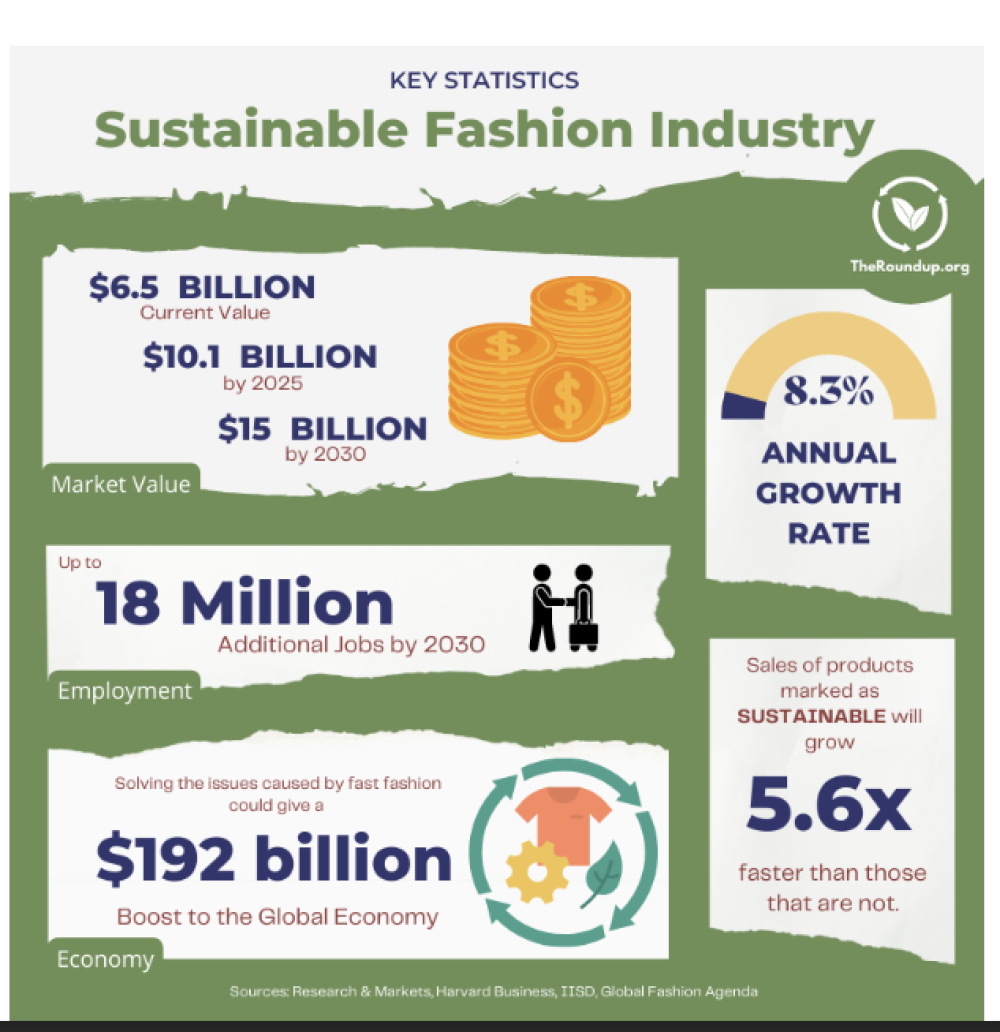
India’s fashion industry is entering a new era. Once dominated by fast fashion and synthetic fibres, it is now steadily pivoting toward sustainability. By 2025, the sustainable fashion market is expected to cross USD 9 billion, nearly doubling from its early 2020s base. If momentum continues, it could reach USD 15–16 billion by 2030 and as much as USD 25–30 billion by the mid-2030s. And with that, it is seen that it is a bullish industry, growing very rapidly with the help of innovation and tech, where sustainability meets both ends.
This growth is being driven by shifting consumer values, especially among Gen Z and millennials, who see fashion as an expression of conscience as much as style. Nowadays, they believe it is important to give back to the environment and bring the change that is highly required and essential for the environment.
Apparel views | TOMO SOLUTIONS PVT LTD Government initiatives, from PLI schemes to integrated textile parks, alongside India’s energy transition, are creating the infrastructure for greener production and which is also adopting sustainable practices. In the decade ahead, sustainable fashion could move from niche to mainstream, potentially making up one in four garments sold by 2035 looking From a global view, higher investments and higher market share are made in this industry, and will continue to look like STAR. This is not just market growth; it is the re-imagining of an industry around culture, commerce, and consciousness, and hence potentially leading to higher profits.
Infrastructure: Mega textile parks with ETPs, CFCs, and modern logistics enable scale. Cleaner dye houses, bio-dyes, and green warehousing cut waste and carbon footprints. All these steps are taken by the private and public firms to make a strong and cleaner foundation for the economy.
Energy Transition: Rapid renewable deployment lowers the grid’s carbon intensity. Solar thermal dyeing, waste-heat recovery, and efficiency upgrades shield firms from volatile fossil costs. Innovation in these areas not only provides better outcomes but is also safer for the
environment.
Innovation & Technology: New frontiers include plant-based leathers, regenerated nylon, bio-dyes, and circular models like upcycling, rentals, and zero-waste design. Blockchain traceability and AI forecasting further sharpen competitiveness. With the use of which there is higher
operational efficiency and effectiveness, leading to higher productivity.
Consumer Shifts: Gen Z and millennials increasingly equate fashion with ethics. Social media amplifies this, making sustainability part of brand identity rather than a niche premium. Today's consumer is inclined towards safe choices and is increasingly investing
Global Standards: As fashion becomes more global, export markets are raising the bar on sustainability. Buyers and regulators now expect
brands to meet Environmental, Social, and Governance (ESG) requirements, ensure full supply chain traceability, and comply with stricter chemical safety norms. This means companies must prove not only that their materials are responsibly sourced, but also that their production processes are safe for workers, consumers, and the environment.
All these growth drivers, projections, and rising global standards paint a picture of an industry
that is quickly redefining itself for a more responsible future.
● If all growth drivers align, sustainable fashion could shift from being a premium, niche market toward becoming part of mainstream fashion supply chains in India. By 2030, sustainable/ethical lines could compose 20-30% of certain product categories (e.g.,
premium western wear, athleisure, accessories).
● By 2033-2035, technologies such as bio-leathers may achieve cost parity (or near parity) with conventional PU or animal leather, particularly if local feedstocks (cactus, mushrooms, pineapple leaves) are industrialised.
● Regulatory tightening (e.g., limits on microplastics, synthetic chemical discharge) may force faster adoption of alternative materials and more circular design. These rules and regulations reduce the carbon footprint in the economy.
● Export markets (EU, UK, US) may demand higher levels of certification and traceability; Brands that proactively integrate will gain a competitive advantage.
To understand this growth more clearly, it helps to break the fashion industry down into segments, each with its own materials, challenges, and
opportunities.
The fashion industry is not a single stream but a collection of interconnected segments. Each has its own materials, challenges, and opportunities.
Natural: cotton, silk, wool, linen, jute, known for comfort but resource-heavy. Use of organiccotton grown without harmful pesticides or fertilizers. But the use of the materials below leads to a reduction in carbon emissions and hence is friendly.
1. Organic cotton is grown without synthetic pesticides and fertilizers, or GMOs. They are eco-friendly, use less water, and protect the soil and the biodiversity, which is also safer for the farmers and the local communities. Certifications such as the Global Organic Textile Standard and, organic content standard are used by industries before purchasing the cotton.
2. Hemp: it is basically the stalks of the hemp plants and grows quickly without pesticides and herbicides, requires really less water, and is naturally resistant to pests. It is similar to linen and softens with wear and washing. Used in manufacturing t-shirts, bags, and denim.
3. Linen: it is revived from the stalks of the flax plant, it is fully biodegradable, requires less water and chemicals than cotton, which is really liked by consumers as it is durable and breathable.
4. Bamboo: It is sourced from the bamboo plants and is sustainable when processed mechanically. It is fast-growing and naturally pest-resistant, which can be grown without fertilizers.
5. Wool, sourced from the fleece of the sheep, is renewable, biodegradable, and is used in sweaters, coats, and socks. certifications like the Responsible Wool Standard are highly taken into account. Ethical concerns include animal welfare, land use, and overgrazing.
1. Mushroom Leather (Mylo™)
Origin: Crafted from mycelium, the intricate root network of fungi.
Adopted by: Stella McCartney, Adidas, and Lululemon companies have been using these.
Advantages:
● Entirely biodegradable with a markedly low environmental footprint.
● Cultivated in a matter of days under carbon-neutral, carefully controlled conditions.
● Closely replicates the texture, strength, and aesthetic of animal leather.
Challenges:
● Still confined to limited-scale production and not yet ready for mass adoption.
● Durability often relies on a thin polyurethane finish, which diminishes its biodegradability.
2. Cactus Leather (Desserto®)
Origin: Derived from the resilient nopal cactus, cultivated in Mexico’s arid landscapes.
Adopted by: Karl Lagerfeld, Fossil, H&M Conscious.
Advantages:
● Thrives on natural rainfall, requiring no irrigation systems.
● Cultivation is chemical-free, with no pesticides or herbicides.
● Offers flexibility and resilience, while being partially biodegradable.
Challenges:
● Reinforced with a polyurethane coating to enhance strength.
● As a result, it is not entirely biodegradable.
3. Pineapple Fiber (Piñatex®)
Origin: Extracted from pineapple leaf waste, a byproduct of the fruit industry.
Adopted by: Hugo Boss, H&M, Nike, Hilton Hotels (upholstery).
Advantages:
● Repurposes agricultural residue, requiring no additional land, water, or inputs.
● Possesses a biodegradable base with a supple, leather-like texture.
● Generates supplementary income for farming communities in the Philippines.
Challenges:
● Requires resins or protective coatings, often petroleum-derived, for structural integrity.
● Comparatively less durable than animal leather or advanced synthetics.
Synthetic: polyester, nylon, acrylic, cheap and durable, but highly polluting. They are man- made fibres derived from petrochemicals, and they dominate the global market due to their low cost and durability.
1. Polyester is derived from petroleum (plastic-based), and it is widely used in fast fashion. It is inexpensive and readily available, durable and wrinkle-resistant, but cons include non-biodegradable, microplastic pollution as it sheds the microfibres when washed and
pollutes.
2. Nylon is petroleum-based, strong, elastic, and abrasion-resistant. The sustainable alternative includes ECONYL®: Regenerated nylon made from fishing nets and industrial plastic.
Cotton: India is the world’s largest producer of cotton, particularly concentrated in Gujarat, Maharashtra, and Telangana. Organic cotton grown without synthetic pesticides, fertilisers, or GMOs is gaining momentum, especially in Madhya Pradesh and Odisha. These areas are highly
manufacturers of cotton.
Hemp: Though historically underutilised, hemp cultivation is finding renewed interest in the Himalayan belt, particularly in Uttarakhand. The crop flourishes with minimal water, grows rapidly without pesticides, and is naturally pest-resistant.
Linen: Flax cultivation, though limited, is slowly being encouraged in the temperate regions of India. Linen is fully biodegradable and requires less water and fewer agrochemicals than cotton.
Bamboo: North-East India, especially Assam and Tripura, is rich in bamboo. When processed mechanically rather than chemically, bamboo becomes a sustainable fibre, fast-growing, naturally pest-resistant, and requiring no fertilisers.
Wool: India’s wool is primarily sourced from Rajasthan, Jammu & Kashmir, and Himachal Pradesh. From fine Pashmina shawls in Kashmir to sturdy sheep wool in the Thar Desert, the diversity is remarkable. While renewable and biodegradable, ethical issues such as animal Welfare and overgrazing are pressing concerns.
Polyester: Derived from petroleum, polyester is widely produced in Gujarat and Maharashtra. It is inexpensive, durable, and wrinkle-resistant, which
explains its dominance.
Mushroom Leather (Mylo™): While largely pioneered in the West, Indian researchers and startups are beginning to explore fungi-based materials due to the country’s biodiversity-rich landscapes.
Cactus Leather (Desserto®): Mexico remains the origin, but similar opportunities exist in India’s arid zones like Rajasthan, where resilient desert flora could inspire regional variants.
Pineapple Fibre (Piñatex®): Particularly promising in India’s pineapple-rich North-Eastern states such as Meghalaya and Tripura.
1. Brands/manufacturers should invest now in upstream sustainability: sourcing, material innovation, and traceability. Getting ahead of regulatory compliance can be a strategic advantage.
2. Policymakers should continue to refine incentives (PLI, subsidies, tax breaks), enforce environmental/social standards, support infrastructure (textile parks, green logistics), and facilitate certification systems.
3. Investors/innovators have opportunities in circular design, material R&D (plant leathers, bio-fibres), alternative dyeing/finishing, digital tools for inventory forecasting, and in consumer education / brand-building.
With the roles of different stakeholders clear, it becomes easier to see where the biggest opportunities lie for shaping the future of fashion.
MARKET OPPORTUNITES
The fashion industry is at a crossroads. For years, it was driven by speed, volume, and trends, but today the real growth opportunities lie in becoming smarter, greener, and more innovative.
Three areas stand out as the biggest openings for brands, startups, and investors.
1. Sustainability Trends
A silent revolution is happening in closets around the world. Shoppers, especially millennials and Gen Z, are asking hard questions: Who made my clothes? What fabric is this? How long will it last?
This has given rise to a wave of opportunities:
Resale platforms like ThredUp, Depop, and Poshmark are projected to outgrow fast fashion in the next decade. In India, Instagram thrift stores are booming among Gen Z.
Rental fashion is gaining momentum with services such as Rent the Runway in the US and Stage3 in India, where consumers borrow designer clothes instead of buying them.
Repair and upcycling are turning into business models. Patagonia offers in-store garment repairs, while India’s Doodlage creates premium apparel out of textile waste.
2. Technology
Technology is reshaping how clothes are designed, produced, and even worn. AI and machine learning can forecast demand with high accuracy, helping brands avoid overproduction, one of the industry’s biggest problems. 3D design tools let designers create virtual samples, cutting waste from multiple physical prototypes.
Companies like CLO3D and Browzwear are leading this space. Augmented Reality (AR) try-ons are transforming online shopping by letting customers “try” clothes through their phones before buying, reducing return rates. Blockchain is bringing radical transparency by recording every step of a garment’s journey, from cotton field to retail shelf. This not only prevents counterfeiting but also reassures consumers about ethical sourcing.
3. Innovation
Perhaps the most exciting opportunities come from innovation, completely rethinking what fashion is made of and how it is consumed.
Next-gen materials: Mushroom leather (Mylo), cactus leather (Desserto), and pineapple fibre (Piñatex) are moving from experimental labs to commercial production. Brands like Adidas, H&M, and Stella McCartney are already showcasing these materials in global collections.
Circular business models: Beyond resale and rental, new models such as “buy-back programs” (where brands take back old clothes to recycle into new ones) are growing fast. Levi’s and H&M are piloting such initiatives.
Digital fashion: Virtual garments, NFTs, and metaverse-based clothing are creating an entirely new industry. In 2021, a digital-only dress sold for over $9,000, proving that people are willing to invest in fashion that doesn’t physically exist. Exploring these opportunities also means looking at the wider environment in which fashion operates, and a PESTLE view helps capture these external factors clearly.
Government policies and national strategies are increasingly steering textiles towards circularity and sustainability with innovation. The Ministry of Textiles and other related bodies are aligning industrial policy with the resources of the nation, working on sustainable manufacturing clusters, waste management investment.
Schemes such as “Make In India” have increased production and manufacturing in the country and, with that, stimulated local, sustainable value chains (such as handloom, khadi, and also organic cotton).
Creation of more opportunities for the recycling sector and the ERP service provider in India, directly aligning with employment opportunities. 
ECONOMICS
The fashion industry is a major economic pillar of the country, driving employment, rising exports, and industrial output. The apparel market is expanding rapidly, forecast to be a much larger market by 2030-2032.
Sustainable practices open new revenue pools (resale, rental, repair services, recycled inputs, digital/virtual fashion). Circularity investments unlock considerable domestic value while creating green jobs in the economy. They unlock INR 30,000 crore with 10k+ jobs.
Adoption costs (certification, traceability systems, renewable energy) create short-term margin pressure, but long-term resilience against regulatory and market risks.
SOCIAL
Consumer awareness is keen, especially among urban millennials and Gen-Z, shifting the demand toward traceability and lowering the environmental footprints. A rise in the indigenous crafts and counter movement to mass fast fashion, use of heritage materials and design, lowering the wastes and carbon emissions, and sustaining the fast fashion growth. Today, worker welfare, non-biased employment in the garment clusters, and other important factors for investors while investing.
Example: Raw Mango, Anavila, Eka, Nor Black Nor White designers/labels that fuse artisanal crafts (handloom, linen, khadi) with modern markets, preserving artisan livelihoods while commanding premium pricing and a range of designs.
TECHNOLOGICAL
Technology is accelerating and is ever-changing. With AI, demand sensing, 3D, innovations in dyeing, fashion tech is the fastest growing frontier, with the adoption of these, there was a reduction in inventory risks, carbon intensity, but it requires capital, skills, and change management.
Adoption of AI forecasting, digital printing reduces the sampling cycles in the fashion tech adoption.
LEGAL
The regulatory landscape is evolving, with environmental regulations on the use of materials, waste management rules, and labor compliance. These are the mandatory disclosures that will raise the minimum standards.
The Environment (Protection) Act, 1986, along with the Water & Air Acts, governs pollution control in the dyeing, printing, and tanning sectors. Factories must obtain permissions from State Pollution Control Boards and adhere to hazardous-waste and plastic-waste rules.
The Factories Act, 1948 (now covered under the Occupational Safety, Health and Working Conditions Code, 2020) governs worker safety and health in factory settings.
ENVIRONMENTAL
Environmental pressures are the industry’s existential defining issues: as it produces large volumes of textile waste, closing the loop and decarbonizing production and urgent priorities. Brands often use waterless dyeing and recycled inputs to reduce the fibre-to-fabric emissions, and failing to follow these can lead to stricter regulations and penalties.
Fashion for Good analyzes the textile waste and solutions to feed textile-to-textile recycling at scale.
Some brands are investing in regional sorting hubs and pre-processing post-consumer textiles, which again helps protect and waste management in the environment. Together, these factors show how wide and complex the fashion industry is. Yet, they also bring out the challenges and trends that shape its future.
But with opportunities come equally daunting challenges. Fashion remains one of the most complex, fragmented, and environmentally damaging industries, and the road to sustainability is full of obstacles.
1. Bottlenecks
While sustainable solutions exist, scaling them across global supply chains is difficult.
Recycling capacity is limited: Only about 1% of clothing globally is recycled back into textiles.
High cost of biomaterials: Mushroom or cactus leather is promising, but still expensive compared to traditional leather or synthetics.
Fragmented supply chains: Fashion production often spans multiple countries, making coordination on sustainability goals difficult.
Governments are stepping in, but regulations vary widely across countries. The EU is introducing stricter laws on textile waste and mandating circular practices. In India, the EPR (Extended Producer Responsibility) policy makes brands responsible for end-of-life garment waste, but enforcement remains a challenge. ESG (Environmental, Social, Governance) standards are becoming baseline expectations for global investors, yet smaller brands struggle with compliance due to high costs.
Fashion’s environmental footprint is staggering:
Responsible for nearly 10% of global carbon emissions. Consumes about 93 billion cubic meters of water annually, enough to meet the needs of 5 million people. Produces 20% of global wastewater, largely due to dyeing and finishing processes.
Releases microplastics into oceans with every wash of synthetic clothes. (3)
Climate change and its effects:
Disruption of Raw Materials
Natural fibres like cotton and wool depend heavily on stable weather. Droughts, floods, and shifting growing seasons make crops less reliable, driving up costs and creating uncertainty for farmers and brands alike, which brings in loss for both the people and affects the economy.
Increased Production Costs
Extreme weather events don’t just damage fields; they also affect factories, warehouses, and transport routes. These disruptions slow down production, cause delays in deliveries, and increase overall expenses across the supply chain.
Regulatory Pressures
Governments are gradually introducing stronger climate policies such as carbon taxes and higher sustainability standards, and brands that don’t keep pace may face added costs, penalties, or reduced access to certain markets, which bind them with the rules and regulations of the economy.
Reputation & Market Risks
Consumers are quick to call out brands that don’t act responsibly. Companies that ignore climate challenges risk reputational damage and losing market share to competitors who embrace sustainability and attract a higher pool of individuals.
Behind glossy storefronts, fashion still grapples with unethical practices.
Labor exploitation remains widespread, especially in developing countries, where garment workers are underpaid and overworked. The 2013 Rana Plaza tragedy in Bangladesh, where a factory collapse killed 1,100 workers, still haunts the industry.
Counterfeiting is a multi-billion-dollar problem, damaging both brand value and consumer trust.
Supply chain opacity makes it difficult to verify if raw materials are ethically and sustainably sourced.
Despite these hurdles, the industry is finding new ways to adapt and evolve. These efforts are shaping a future where fashion becomes more sustainable and innovative.
FUTURE OUTLOOK OF THE SUSTAINABLE FASHION INDUSTRY
1. India is poised to scale from production to advancements in circular and tech-enabled fashion, which is driven by the increasing domestic demand, targeted government incentives, recycling, and sorting capabilities. The goal of the nation is to triple the sector by 2030, reframing sustainability.
2. Production Linked Incentives (PLI) and other schemes are directing capital into technical textiles and value-adding segments; revived application windows signal continued government backing. Higher capital will flow in for recycling and sorting hubs for better waste management, then an increase in circular clusters from linear factories, creating ecosystems, reducing material imports, and value capture.
3. Market scale & tech growth. India’s fashion-tech market is projected to roughly double from ~US$10.5B in 2024 to ~US$18.3B by 2030, indicating fast digital monetization opportunities. Digital/AR adoption shows very high CAGRs. The contribution of this industry would double the GDP by 5%industrial expansion, export growth, and higher domestic value retention.
4. Co-fund MSME tech hubs (3D design, waterless dyeing demos) to unlock broad decarbonization across the supply chain.
As the industry looks ahead, it also reflects on its roots. Comparing traditional and modern fashion shows how culture and innovation can come together.
TRADITIONAL VS MODERN FASHION
Traditional fashion is rooted in culture, heritage, symbolism, and clothing is often tied to rituals, festivals, and regional identity. Handmade designs, labor-intensive with the use of methods like weaving, embroidery, block printing, and natural dyes, each carries a significance.
In this method, natural fibres such as cotton, silk, jute, etc, are used, which directly align to lower the carbon footprint.
Slow production, which also included the repair of the clothing, reusing it, and passing it down to different generations, leading to minimal waste. It further provides livelihood to the artist weavers, who keep cultural heritage alive, but they often struggle with fair wages. The innovation is limited due to craft techniques and hand tools.
Modern fashion is driven by innovation, trends, and global influences; it is often shaped by culture, media, and technology. It is machine-driven, industrial, and increasingly digital with 3D, fast, and lean manufacturing, and innovation enhances the performance of fabrics, polyester. Sustainability innovations are reshaping modern fashion ( with organic cotton, hemp, recycled fibres).
Fast fashion dominates, low-cost, trend-driven, mass-produced, but it leads to overconsumption and waste. However, modern movements like slow fashion, resale, and rental platforms are reviving sustainable consumption habits and attracting a pool of consumers. Technology is redefining both design and consumption experiences and redefining the future.
The future is fusion: traditional craft + modern technology. Designers are blending artisanal heritage with sustainable innovations and designs (e.g., Sabyasachi partnering with H&M, or startups digitising handloom supply chains). Looking at these contrasts makes it easier to see how fashion has split into two major paths. The clash between fast fashion and sustainable fashion defines much of today’s industry.
FAST FASHION VS SUSTAINABLE FASHION
Fast fashion is built on speed and affordability. They have quick designs to rack cycles, deliver trendy, low-cost clothes to consumers, and encourage frequent purchasing. Mass produced in the large factories, often in developing countries, emphasis on cost-cutting materials and low wages. There’s heavy use of toxic dyes, which accounts for 10% global carbon emissions. This culture is driven by wear once and discard with influencer trends.
Sustainable fashion focuses on longevity, ethics, and environmental responsibility. Production is made in small batches and is made-to-order, with fair wages and reduced waste. Natural, organic, and recycled materials are used in the production. Sustainable fashion promotes a circular economy and reduces the carbon footprint. Further, brands like Patagonia repair and resell clothes, extending the garment's life. Thrift stores follow the same method of reusing clothing. The contrast between the two highlights the urgent need for fresh solutions. This is where startups and innovations begin to play a key role in shaping the industry’s direction.
STARTUP INVESTMENTS AND INNOVATION
The Indian fashion industry is undergoing a profound transformation due to dynamic startups and strategic investments. Leveraging artificial intelligence to reduce the overproduction, minimise the waste, and use 3D design. The blending of technology, sustainability, and investment is shaping a vibrant fashion ecosystem, where caring for the environment goes hand in hand with creating value, transforming the way clothes are made, worn, and appreciated.
Trends
Investors are increasingly investing in startups that combine profitability with measurable environmental impact, which not only leads to high growth but is a responsible investment opportunity for the investors themselves.
Public investments
Government incentives and private investments together are creating a fertile ecosystem for sustainable fashion. It launched in 2021, the PLI (The Production-Linked Incentive) scheme for textiles aimed at the production of MMF fabrics.
1. Total outlay: 10,683 crore rupees of total investment
2. It is operational till 2030
The EPR policy mandates that producers, importers, and brand owners take responsibility for the disposal of their products at the end of their life cycle. The Companies Act encourages Corporate Social Responsibility (CSR) investments in sustainable innovations, promoting circular fashion and reducing environmental impact.
Project SU.RE ‘Sustainable Resolution’, initiated by the Ministry of Textiles in the collaboration with CMAI(Clothing Manufacturers Association of India) and supported by United Nations in India, is known to be the largest voluntary commitment to this industry which helps in reducing the carbon footprints and optimum use of resources and as of today 30 leading fashion brands pledge to align their operations under SU.RE.16 biggest brands of India have come together to save the earth.
Startups investments
India boasts over 159,000 recognised startups, up from approximately 500 in 2016. These startups have reportedly created over 1.66 million direct jobs, significantly contributing to employment generation. India added 6 new unicorns in 2024, bringing the total to over 100. With 11 new startups in 2025 alone. (4)
The Startup India initiative has led to a significant increase in the number of women who have led startups and hence increased the numbers.
The technological sector dominates, and so does the fashion tech industry, working in hand with sustainability. India's startup ecosystem is experiencing a dynamic phase, with increasing investments and a focus on sustainable and innovative sectors.
Zero waste innovation
The use of 3D printing in the manufacturing of garments has led to fabric waste. These types of garments are often showcased in the designer/ brand shows, reflecting innovation while promoting sustainable actions. In 3D printing, precise digital patterns are produced; many brands have adopted and promoted the use of such techniques. The production is localized, which leads to fewer shipments, which lowers the carbon footprint. Higher integration of recycled plastics into filaments. It is a circular economy and promotes reusability, complex structures can be achieved by lightweight materials, and zero waste, reduced water usage, dye pollution, and chemical treatments. This innovation is of today, yet carrying a promise for tomorrow, where fashion and sustainability walk hand in hand.
STRATEGIC RECOMMENDATIONS FOR STARTUPS:
1. Resale & rental apps: Startups can create platforms where people buy second-hand or rent clothes at low prices. Creating platforms that use AI to optimise wardrobe usage and provide awareness to consumers on sustainable fashion.
2. Eco-materials: New startups can make mushroom leather, cactus leather, bamboo fabrics, or recycled textiles. Work on different ideas to form innovative products that reduce the wastage and emissions, just like fashion for good.
3. Circular business model: Companies can collect old clothes and turn them into new fabrics. Here, encourage conscious consumer behavior. Working on thrift stores, virtual recycling apps, etc, so as to really value the garments and the resources. Example: Doodlage thrives by converting textile waste into premium apparel.
4. Digital tools: Startups can use blockchain for supply chain transparency and increase the use of AI and predictive analysis to produce the number of goods in demand, which reduces overproduction and wastage.
5. Invest in R&D for materials: prioritize plant-derived and recycled fibers. And increasing the use of hemp, banana, and pineapple fibre shows market readiness.
6. Expanding awareness campaigns: Educating consumers about the environmental costs of fast fashion and creating loyalty through sustainable storytelling.
7. Innovation hubs: Encourage the creation of dedicated green fashion and circular economy funds that not only fuel innovation but also tap into the world’s growing appetite for responsible and sustainable investments.
OPPORTUNITIES AND PROJECTIONS
1. Youth are increasingly favouring ethical and eco-friendly brands. Platforms like Okhai and No Nasties show how sustainability builds loyalty and premium positioning in the market.
2. Green deal and carbon border adjustment policies create opportunities for the indian exporters who invest in the circular processes.
Slow Fashion: Already valued at US$9 billion, 1. this segment is expected to expand as consumer awareness deepens.
2. If the fashion industry embraces sustainable practices, it has the potential to reduce its carbon emissions by nearly a third by 2035, a meaningful step that brings India closer to its long-term net-zero goal for 2070.
3. Within this surge, sustainable fashion is expected to outpace fast fashion, growing at nearly double-digit momentum year after year. The number of homegrown ventures in this space is expected to double within the next five to seven years, reshaping the competitive landscape.
All these opportunities and projections show that the fashion industry is at a turning point. What comes next will decide how strongly it embraces sustainability and innovation.
CONCLUSION
Sustainable fashion is not just a trend but the future of the fashion industry. By integrating technology, innovation, and eco-conscious practices, the brands not only create garments but a piece of innovation which is stylish, durable, and safe for the environment and the consumer itself. This industry benefits everyone: consumers gain safe, fashionable products; businesses earn profits and build trust; and society moves toward less waste, fair wages, and cleaner production.
For startups, the opportunities are vast, and with the right innovation and consumer focus, success rates are higher than average. By 2035, the sustainable fashion industry is poised to be both a profitable industry and a force for global change.
The future of the fashion industry is sustainable, where the style would meet responsibility and innovation, shaping a better world.
BY:- ISHANI CHOPRA, KIRANJOT KAUR
References
1.
3. https://goodonyou.eco/fashions-water-impacts/